
The brand
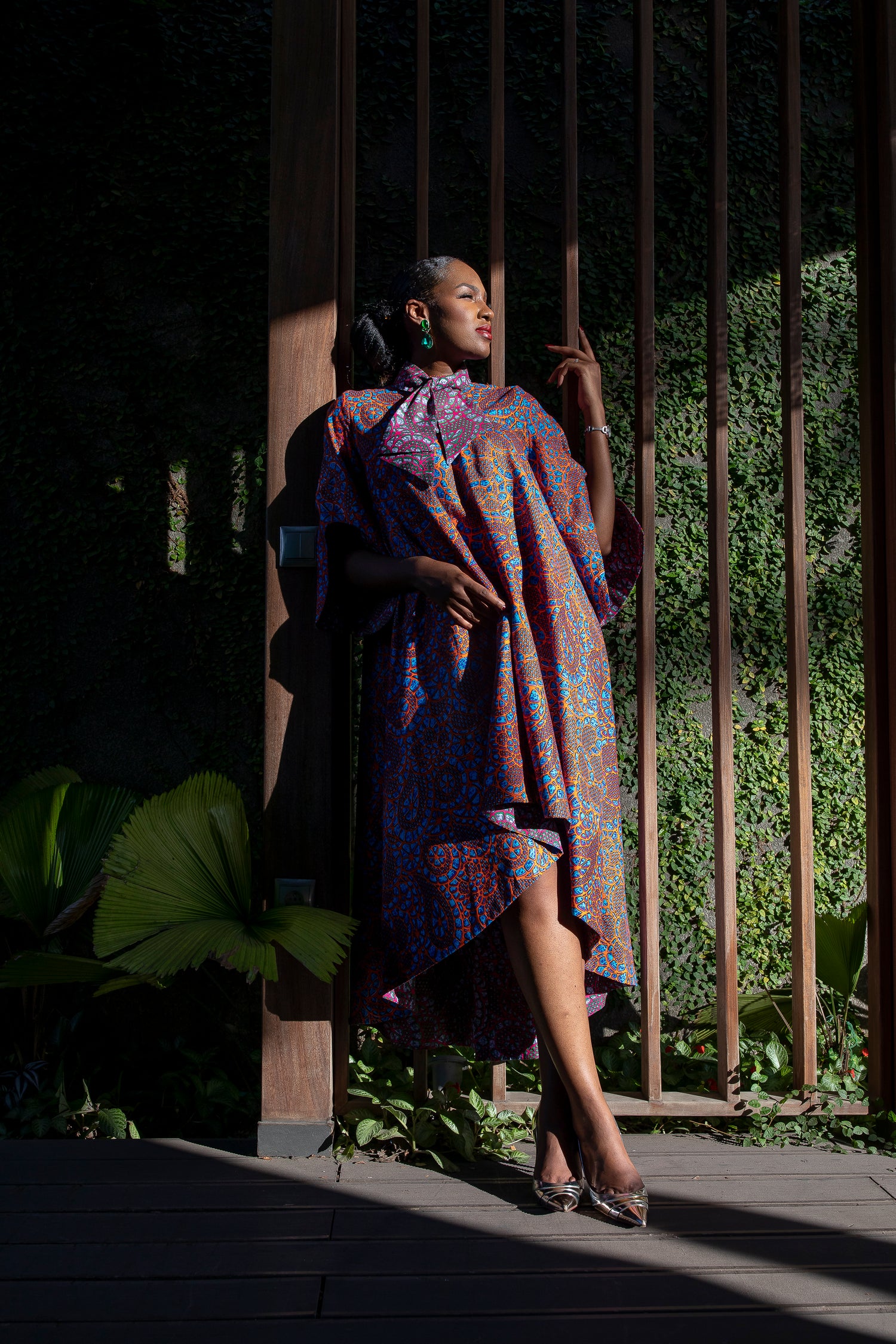
Our philosophy
The African continent did not create Wax print, but without African women, it would never have existed.
It was African women who created the craze for wax print fabric, as well as the global product it has become today. They managed to give this fabric a distinct and unique style, which is at the heart of our brand strategy: Authenticity.
The desire to create an African wax print brand meets another imperative: to create what we consume, because economic independence is cultural independence. It's about being able to pass on to our children our own worldview, our aesthetics, and our ways of life.
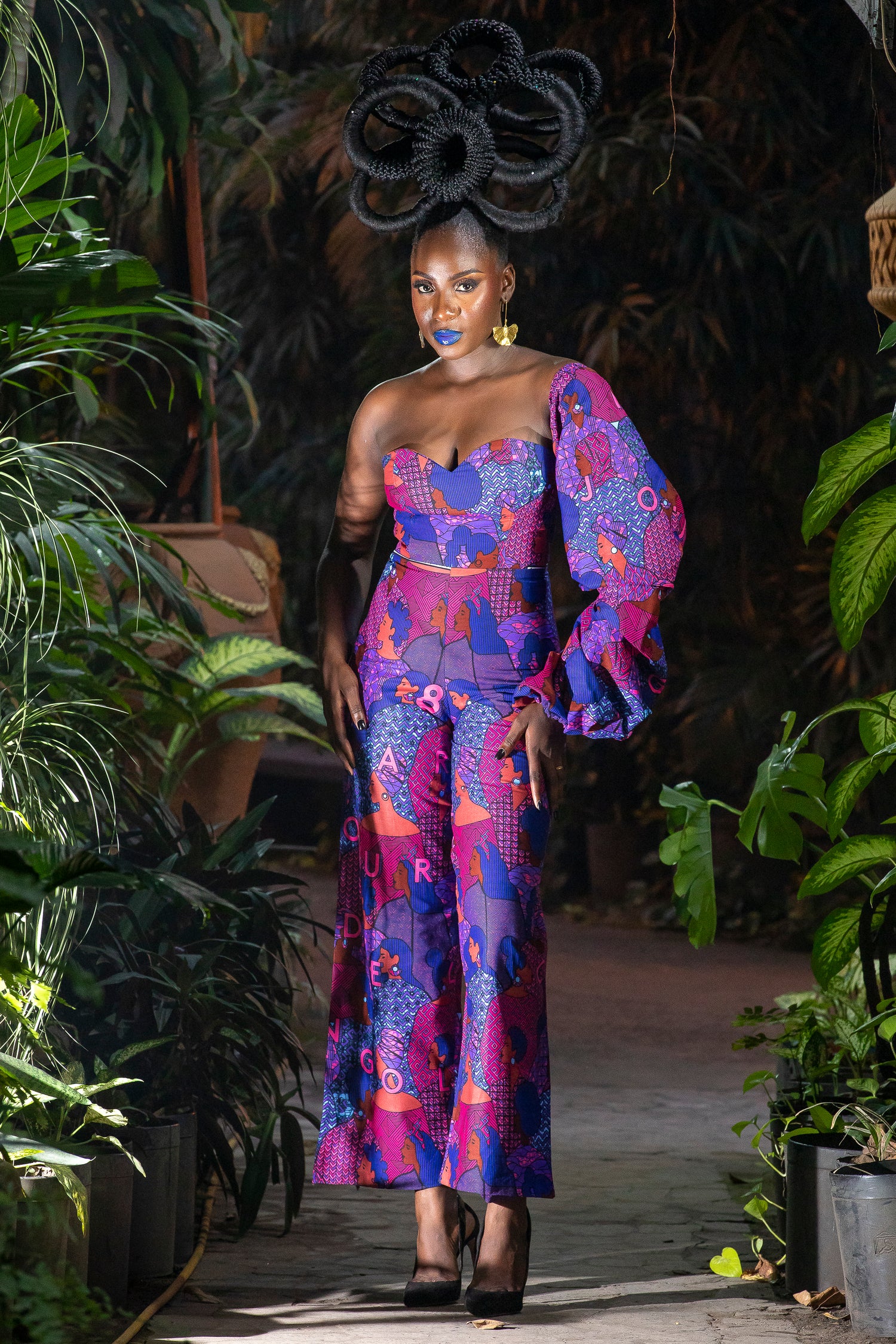
Our Story
Born from the meeting of two women sharing the same philosophy.
It was in 2020, in the midst of lockdown, that the brand's founders, Rukiya Hamadi Lusinde and Tshibwabwa Mua Bay Kamba Amba, launched their first collection. From the outset, the aim was to rethink the rules of a market where locals are only consumers. When it comes to Wax fabric, China, Europe, and more recently India, dictate the trends. "We wanted to create a brand that would become an active player in this market, by bringing a 'local' added value: an African loincloth, created by African women."